
💡 Key Takeaways
- •Learn cost-effective strategies to optimize your local business listing.
- •Understand the role of user reviews and local content in search rankings.
- •Discover tools to track and analyze your local SEO performance.
Introduction
In the digital landscape of 2026, ranking in the Google Local 3-Pack has become a crucial goal for businesses aiming to capture nearby customers. The Local 3-Pack—essentially the top three local business listings that appear in response to a user’s search query—serves as prime real estate in the Google local search ecosystem. For small businesses and local entrepreneurs, understanding how to secure a spot in this coveted space without the hefty price tag of an SEO agency is not only possible but essential.
With the evolution of local search focusing increasingly on user intent and hyperlocal context, traditional SEO tactics are shifting. This shift is driven by Answer Engine Optimization (AEO), which prioritizes providing direct answers to user queries, often through platforms like ChatGPT and other AI-driven interfaces. This transformation highlights the importance of optimizing for voice searches and localized content, as they become more prevalent with the rise of virtual assistants and smart devices.
To effectively rank in the Local 3-Pack, businesses must first focus on the fundamentals of Google Business Profile optimization. This involves:
- Claiming and verifying your business to ensure the information is accurate and trusted by Google.
- Optimizing your business information, such as your business name, address, phone number, and website (NAPW consistency), which are critical for local citations and search visibility.
Equally important is building a robust network of local citations. These citations—mentions of your business on local directories and websites—enhance your business’s credibility and visibility online. Consistency and accuracy in these listings play a pivotal role in improving your local search rankings.
Another cornerstone of successful local SEO is leveraging user reviews and ratings. Encouraging positive reviews and adeptly managing negative feedback not only improves your online reputation but also influences your ranking in the Local 3-Pack. In 2026, user-generated content is a powerful tool for enhancing business credibility.
Localized content creation is essential for attracting local audiences. Crafting content that resonates with the local community and strategically using local keywords can significantly boost your local search engine performance. Meanwhile, the integration of social media platforms into your local SEO strategy can further engage local communities and promote events and offers that are relevant to your target audience.
Finally, understanding the nuances of voice search optimization is critical. With an increasing number of users relying on voice-activated searches, optimizing content for voice queries has become indispensable.
For businesses seeking a seamless, efficient, and cost-effective way to manage their local SEO efforts, the AI Business Launcher (ABL) platform offers a comprehensive suite of tools. From setting up and optimizing your Google Business Profile to tracking and analyzing local SEO performance, ABL provides the resources needed to excel in the competitive local search landscape of 2026.
By focusing on these strategies and utilizing innovative platforms like ABL, businesses can effectively rank in the Google Local 3-Pack, ensuring they remain visible and competitive in the ever-evolving world of local search.
The Evolution of Local Search in 2026
The landscape of local search has transformed dramatically by 2026, driven by advancements in technology and changing consumer behavior. Staying ahead in this evolving environment requires a deep understanding of these changes and strategic adaptations to ensure your business ranks in the coveted Google Local 3-Pack without the need for an expensive SEO agency. Here’s what you need to know about the evolution of local search in 2026:
The Shift from SEO to AEO
-
Answer Engine Optimization (AEO) has become crucial. With the rise of AI-driven search engines like ChatGPT local search, businesses must optimize their content to be the best answer, not just the best result. This means focusing on providing concise, relevant, and contextually rich information that AI can easily surface.
-
Structured data and schema markup are more important than ever. Implementing these ensures that search engines understand your business details accurately, enhancing your visibility in local search results.
Hyper-Personalization and Contextual Search
-
Hyperlocal searches have intensified. Consumers are looking for results that are not just local but hyper-relevant to their immediate context and needs. Utilize geo-targeting and local content strategies to capture these searches effectively.
-
Contextual search engines now evaluate user intent and behavior more deeply. This involves understanding the nuanced needs of users at specific times and places, making your Google Business Profile optimization pivotal for appearing in these search results.
Integration of AI and Machine Learning
-
AI-driven algorithms are at the heart of local search. They assess a multitude of factors, from user reviews to engagement metrics, to determine the best results. Ensure your local SEO strategies incorporate AI insights and adapt to algorithm changes swiftly.
-
Machine learning aids in predicting search trends. Businesses need to leverage predictive analytics to anticipate shifts in consumer behavior and adjust their strategies accordingly.
Voice and Visual Search Dominate
-
Voice search optimization is no longer optional. With the proliferation of smart devices, optimizing for voice queries has become essential. Use natural language phrases and FAQs to align your content with how people speak.
-
Visual search technology advances mean consumers can now use images to search for local businesses. Ensure your business is visually optimized with high-quality images and alt text that accurately describe your offerings.
Actionable Strategies for 2026
-
Focus on user experience and engagement: Websites that are mobile-friendly, fast, and easy to navigate rank better in local searches.
-
Leverage user reviews and feedback: Encourage positive reviews and manage negative feedback promptly. This user-generated content significantly influences local search rankings.
-
Harness the power of social media: Engage with local communities and promote events or offers that resonate with your target audience.
In conclusion, navigating the evolution of local search in 2026 demands agility and an innovative approach. For businesses looking to streamline this process and harness the full potential of modern local SEO techniques, consider the AI Business Launcher (ABL) platform. ABL offers tools and insights tailored for optimizing your business profile, monitoring local SEO performance, and adapting to emerging trends efficiently.
Why Traditional SEO is Dying
The landscape of search engine optimization (SEO) is undergoing a seismic shift, especially in the realm of local SEO. As we step into 2026, it's becoming increasingly evident that traditional SEO strategies are losing their efficacy. Business owners who wish to rank in the Google Local 3-Pack must adapt to new methodologies that are more aligned with user intent and technological advancements.
Key Reasons Why Traditional SEO is Dying
-
Algorithm Complexity: Google's algorithms have evolved to prioritize user experience and intent over mechanical keyword stuffing and backlink strategies. The rise of Answer Engine Optimization (AEO) is a testament to this shift, focusing on providing direct answers to user queries rather than relying solely on traditional SEO tactics.
-
Hyperlocal Search Focus: With the increase in hyperlocal searches, users are seeking results that are tailored to their immediate geographical location. This requires businesses to invest in Google Business Profile optimization and incorporate ChatGPT local search strategies to meet hyperlocal demands effectively.
-
Voice Search Dominance: The proliferation of voice-activated devices means that more users are conducting searches conversationally. Optimizing for voice search trends is crucial, as these queries often differ from typed searches in structure and intent, necessitating a departure from conventional SEO practices.
-
User-Centric Content: User-generated content, such as reviews and ratings, plays a pivotal role in local search rankings. Traditional SEO often overlooks the importance of leveraging user reviews and ratings to build credibility and trust, which are now vital components for ranking in the Local 3-Pack.
-
Social Media Integration: The intersection of social media and local SEO is more pronounced than ever. Platforms like Facebook and Instagram are not just about engagement but also serve as significant signals for local search. Engaging with local communities and promoting events can enhance your local SEO footprint.
Actionable Strategies for 2026 (Continued)
-
Optimize for AEO: Focus on creating content that answers specific questions related to your business. Use tools like Google's People Also Ask and FAQs to guide your content strategy.
-
Enhance Google Business Profile: Ensure that your business information is accurate and optimized. Regularly update photos, respond to reviews, and post updates to maintain an active and engaging profile.
-
Leverage AI Tools: Utilize platforms like the AI Business Launcher (ABL) to automate and streamline your local SEO efforts. ABL can help with keyword analysis, content generation, and monitoring local SEO performance, ensuring you stay ahead of the competition.
-
Invest in Voice Search Optimization: Structure your content to match natural language queries. This includes using long-tail keywords and question phrases that mimic conversational searches.
-
Engage Socially: Integrate social media strategies into your local SEO plan. Share local events, offers, and engage actively with your audience to boost your local visibility.
In conclusion, as traditional SEO methodologies wane, embracing new strategies that focus on user intent, hyperlocal search, and technological advancements will be pivotal. Platforms like AI Business Launcher offer innovative solutions to navigate this evolving landscape, ensuring your business remains competitive in the Google Local 3-Pack.
The Rise of Hyperlocal Searches
In the ever-evolving landscape of digital marketing, the rise of hyperlocal searches is reshaping how businesses engage with their community and attract local customers. By 2026, hyperlocal marketing has become a crucial aspect of effective local SEO strategies, driven by advancements in technology such as Answer Engine Optimization (AEO) and ChatGPT local search capabilities. Here's how you can leverage this trend to boost your presence in the Google Local 3-Pack, without the need for an expensive SEO agency.
Understanding Hyperlocal Searches
Hyperlocal searches refer to queries that are extremely specific to a particular geographic location. This includes searches with phrases like "near me," or specific neighborhood names, reflecting users' desire for immediate and relevant results. As mobile and voice searches become more prevalent, hyperlocal searches allow businesses to be discovered by users who are ready to convert.
Key Factors Driving the Rise of Hyperlocal Searches:
- Increased Mobile Usage: With the proliferation of smartphones, users are frequently conducting searches on-the-go, looking for nearby services or products.
- Advancements in Geo-Targeting Technology: Improved GPS accuracy and location-based services allow search engines to deliver more precise results.
- Voice Search Optimization: As voice-activated devices become household staples, optimizing for voice search queries, which tend to be more conversational and location-specific, is imperative.
Leveraging Hyperlocal Searches for Your Business
To capitalize on hyperlocal searches, begin with these actionable strategies:
-
Optimize Your Google Business Profile: Ensure your profile is complete and accurate. Include specific location details and update your business hours, contact information, and service areas regularly. This increases visibility in local searches and enhances your chances of appearing in the Google Local 3-Pack.
-
Create Locally-Focused Content: Develop content that speaks directly to your local audience. This can include blog posts about local events, partnerships with neighboring businesses, or customer testimonials from your community.
-
Engage with Local Citations and Directories: Ensure your business is listed in local directories and online platforms relevant to your industry. Consistency in NAP (Name, Address, Phone number) across these platforms is crucial for local SEO.
-
Harness User Reviews and Ratings: Encourage satisfied customers to leave positive reviews on your Google Business Profile and other review sites. Responding to reviews, both positive and negative, demonstrates customer engagement and builds trust within the community.
-
Utilize Social Media for Local Engagement: Actively participate in local online communities and promote events or special offers to engage with nearby customers. This enhances your brand's local presence and can lead to higher foot traffic or service inquiries.
Embrace the Future of Local Search
As the digital marketing world continues to evolve, staying ahead of trends like hyperlocal search is vital. By focusing on Google Business Profile optimization, engaging locally, and leveraging new technologies, your business can effectively rank in the Google Local 3-Pack.
For a streamlined approach to managing your local search strategy, consider using the AI Business Launcher (ABL) platform. ABL offers tools for optimizing local SEO, managing hyperlocal content, and staying ahead of search algorithm changes, ensuring your business remains competitive in the local market.
Understanding the Google Local 3-Pack
What is the Google Local 3-Pack?
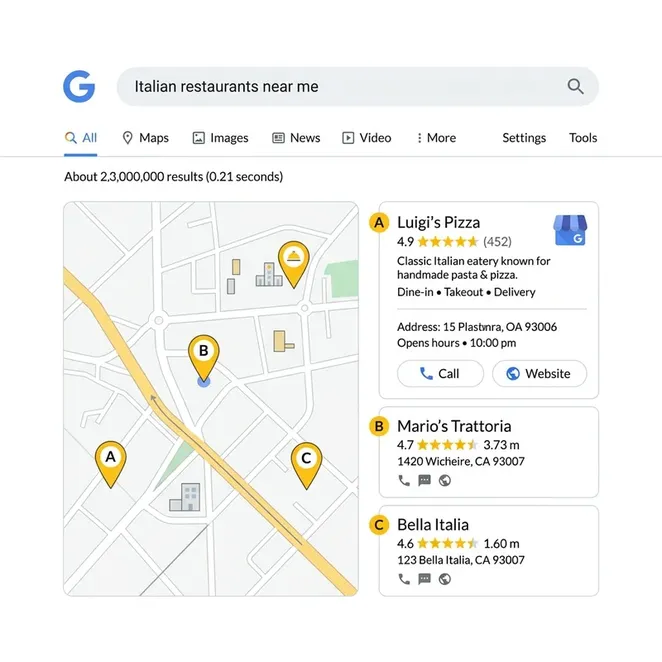
The Google Local 3-Pack is a critical component of local SEO and Answer Engine Optimization (AEO), representing the top three local business listings that appear in a Google search when users seek services or products nearby. As of 2026, the Google Local 3-Pack has evolved to be more interactive, integrating directly with platforms like ChatGPT local search, providing users with instant, conversational responses about local businesses. This feature predominantly appears above the traditional organic search results, offering maximum visibility and click-through potential for businesses.
In the context of Google Business Profile optimization, the Local 3-Pack showcases key business information such as name, address, phone number (NAP), business hours, and customer reviews. This makes it a powerful tool for driving foot traffic and online engagement.
Key factors influencing the Local 3-Pack ranking:
- Relevance: Ensure your business profile aligns with the user's search intent. This includes precise category selection and comprehensive service descriptions.
- Proximity: The physical distance from the searcher’s location remains a critical ranking factor. Use hyperlocal keywords in your content to enhance this proximity signal.
- Prominence: Build a robust online presence through local citations, backlinks, and user engagement across platforms.
How the Google Local 3-Pack Impacts Your Business
Securing a spot in the Google Local 3-Pack can significantly impact your business by increasing visibility, enhancing credibility, and driving both online and offline conversions. Businesses in the 3-Pack often see increased website traffic and higher in-store visits, which can directly translate to increased revenue.
Benefits of appearing in the Google Local 3-Pack:
- Increased Visibility: With the Local 3-Pack appearing above organic results, your business gains prime real estate on search pages.
- Enhanced Credibility: Displaying in the Local 3-Pack elevates trust, as users associate top listings with authority and quality.
- Boosted Engagement: Features like call buttons, directions, and review snippets facilitate immediate user actions, translating to higher engagement rates.
Actionable strategies for leveraging the Local 3-Pack:
- Optimize Your Google Business Profile: Regularly update your profile with accurate information, compelling descriptions, and high-quality images.
- Engage with Customer Reviews: Actively manage and respond to reviews to improve your business's reputation and ranking.
- Utilize AI Tools: Platforms like the "AI Business Launcher" (ABL) can streamline the optimization of your business profile, manage local citations, and analyze AEO strategies efficiently.
By focusing on these elements, your business can effectively harness the potential of the Google Local 3-Pack, making it an indispensable part of your local SEO strategy.
What is the Google Local 3-Pack? (Continued)
The Google Local 3-Pack is a crucial element in local search results, prominently displayed on the search engine results page (SERP) when users conduct location-based searches. As of 2026, this feature remains an indispensable tool for enhancing local visibility and driving foot traffic. Understanding its mechanics is vital for businesses seeking to maximize their local SEO potential without the hefty price tag of hiring an SEO agency.
What is the Google Local 3-Pack? (Part 2)
The Google Local 3-Pack is a condensed listing of three local businesses that appear at the top of the search results for location-specific queries. This feature is part of Google's local search algorithm, which prioritizes the most relevant and geographically proximate businesses to the searcher.
- Visual Appeal: The Local 3-Pack typically includes a map with pins and essential business information such as name, address, phone number (NAP), operating hours, and customer ratings.
- Priority Placement: Appearing in the Local 3-Pack can drastically increase visibility, as it is often the first set of results users see, even before organic search results.
- Hyperlocal Relevance: By 2026, hyperlocal searches have surged, meaning the Local 3-Pack is more critical than ever for capturing nearby customers.
Key Components of the Local 3-Pack
-
Google Business Profile Optimization: Ensure your Google Business Profile is fully optimized. This requires accurate NAP information, detailed business descriptions, and regularly updated content such as photos and posts.
-
Local Citations and Consistency: Build and maintain consistent local citations across various platforms. This consistency signals to Google that your business is legitimate and trustworthy.
-
User Reviews and Engagement: Encourage customers to leave positive reviews and engage with them. Responding to reviews—both positive and negative—demonstrates active management and customer care, which can influence rankings.
-
Localized Content: Create content that resonates with the local community. Incorporate local keywords and address local events or issues to enhance relevance.
-
Answer Engine Optimization (AEO): With the rise of AI-driven search tools like ChatGPT, optimizing your content for direct answers and voice search is essential. This involves structuring content to address common questions and using conversational keywords.
Practical Steps to Improve Your Local 3-Pack Presence
- Claim and Verify Your Google Business Profile: This is the first step in establishing your online presence. Without verification, your business is unlikely to appear in the Local 3-Pack.
- Leverage AI Tools: Utilize platforms like AI Business Launcher (ABL) to streamline your local SEO efforts. ABL offers automated insights and recommendations tailored to local search dynamics, enabling businesses to optimize their presence efficiently.
- Monitor and Adjust: Use analytics tools to track your local SEO performance. Regularly assess which strategies are working and make data-driven adjustments to improve your position in the Local 3-Pack.
In essence, the Google Local 3-Pack is a dynamic feature that requires consistent effort and strategic planning. By focusing on optimization and leveraging advanced tools, businesses can effectively rank in these coveted spots, driving more local traffic and boosting their bottom line.
How the Google Local 3-Pack Impacts Your Business (Continued)
In 2026, ranking in the Google Local 3-Pack can be a game-changer for your business, profoundly impacting visibility, credibility, and customer acquisition. Understanding its influence on your business is crucial for leveraging local search to your advantage.
Increase in Visibility and Traffic
- Top of Search Results: The Google Local 3-Pack places your business at the very top of local search results. This prime real estate means that users see your business information before they even encounter organic results or paid ads.
- Enhanced Click-Through Rates (CTR): Businesses that appear in the Local 3-Pack witness significantly higher CTRs. Users are more likely to click on listings that are easily accessible and provide essential information at a glance.
Boost in Credibility and Trust
- Verified Business Information: Having a presence in the Local 3-Pack signals to potential customers that your business is credible and verified by Google. This trust factor can be pivotal, particularly for small businesses trying to establish a local reputation.
- Reviews and Ratings: The display of star ratings and reviews directly in the Local 3-Pack can enhance your business's perceived trustworthiness. Positive reviews can directly influence a potential customer's decision to engage with your business over competitors.
Influence on Customer Engagement
- Direct Interaction Opportunities: The Google Local 3-Pack provides direct links to call, visit the website, or get directions. This seamless interaction pathway encourages immediate user actions, driving foot traffic and online engagement.
- Localized Content Relevance: With the rise of hyperlocal searches and ChatGPT local search integration, appearing in the Local 3-Pack ensures your business capitalizes on localized queries. This relevance can significantly enhance user engagement.
Competitive Advantage
- Outperform Competitors: By appearing in the Google Local 3-Pack, you gain a competitive edge over businesses that do not rank. This visibility can capture market share from competitors who rely solely on traditional SEO strategies.
- Adaptation to Search Trends: As traditional SEO fades and Answer Engine Optimization (AEO) becomes prominent, utilizing Google Business Profile optimization to secure a spot in the Local 3-Pack is essential for staying ahead.
Actionable Steps for Leveraging the Google Local 3-Pack
- Optimize Your Google Business Profile: Ensure your business information is accurate, complete, and regularly updated. This includes leveraging keywords effectively to enhance discoverability.
- Encourage and Manage User Reviews: Cultivate positive reviews and manage feedback to enhance your business's reputation and influence Local 3-Pack rankings.
- Utilize AI Business Launcher (ABL): Consider platforms like ABL to streamline the optimization of your Google Business Profile and develop strategies to improve your local search visibility.
In conclusion, the Google Local 3-Pack is not just a feature of search engine results; it's a powerful tool that can drive significant business growth. By understanding its impact and strategically optimizing your presence, you can harness local search to benefit your business in 2026 and beyond.
Setting Up Your Google Business Profile
Claiming and Verifying Your Business
To successfully rank in the Google Local 3-Pack, claiming and verifying your Google Business Profile is a crucial first step. This process ensures your business is recognized as legitimate by Google, enhancing trust with local searchers. Here's how you can efficiently claim and verify your business in 2026:
-
Sign Into Google My Business: Use your Google account to access the Google My Business platform. If you don't have an account, create one specifically for your business.
-
Search for Your Business: Utilize the search function to see if your business already exists in Google's database. If it does, proceed to claim it. If not, you'll need to add your business manually.
-
Provide Accurate Details: Enter your business name, address, phone number, and website. Ensure these details are consistent with your other online listings to improve your local SEO and AEO (Answer Engine Optimization).
-
Verification Process: Choose your preferred method for verification. In 2026, Google offers multiple verification methods, including:
- Postcard by Mail: Still a popular method, where Google sends a postcard with a verification code to your address.
- Phone or Email: Instant verification options if your business is eligible.
- Google's AI Verification: A newer method using AI-driven video calls to verify your business in real-time, leveraging tools like ChatGPT local search for efficiency.
Optimizing Your Business Information
Once verified, optimizing your Google Business Profile is key to standing out in the Google Local 3-Pack. This involves enhancing various elements of your profile to align with 2026's local search trends and answer engine optimization strategies:
-
Business Description: Write a concise yet informative business description that includes primary keywords like "local business SEO" and "Google Business Profile optimization." Highlight unique selling points and services offered.
-
Categories and Attributes: Select appropriate categories that reflect your business accurately. In 2026, Google allows more nuanced categorization, which can improve search relevance. Utilize attributes to highlight special offerings like "women-led" or "24/7 availability."
-
Photos and Videos: Engage potential customers by uploading high-quality images and videos. In 2026, interactive 360-degree images and short videos are particularly effective for ChatGPT local search and visual SEO.
-
Business Hours: Keep your business hours updated, including special holiday hours. This not only avoids customer frustration but also enhances your profile's reliability in local searches.
-
Posts and Updates: Regularly use Google Posts to share offers, events, and updates. These posts can significantly boost visibility and engagement, especially when optimized with local SEO keywords.
-
Q&A Section: Monitor and actively manage the Q&A section of your profile. Provide informative and timely responses to questions, leveraging AEO to ensure your answers are both direct and comprehensive.
By diligently setting up and optimizing your Google Business Profile, you lay a solid foundation for ranking in the Google Local 3-Pack. For a more seamless setup and continuous optimization, consider using the AI Business Launcher (ABL) platform. ABL offers cutting-edge tools and AI-driven insights tailored to enhance your local SEO efforts, ensuring your business remains competitive in the ever-evolving landscape of local search.
Claiming and Verifying Your Business (Continued)
To successfully rank in the Google Local 3-Pack, claiming and verifying your Google Business Profile is a fundamental step. This process not only establishes your online presence but also enhances your visibility in hyperlocal searches and optimizes your business for Answer Engine Optimization (AEO). Here’s a step-by-step guide to ensure your business stands out in the competitive landscape of 2026.
Step-by-Step Guide to Claiming and Verifying Your Business
-
Sign Up for a Google Account:
- If you don't already have a Google account, create one. This account will be the cornerstone of your Google Business Profile management.
-
Navigate to Google Business Profile Manager:
- Visit the Google Business Profile Manager and click on “Manage now” to start the process.
-
Enter Your Business Information:
- Business Name and Address: Ensure your business name is consistent with what you use elsewhere online.
- Phone Number and Website: Use a local phone number and link your business website to enhance credibility.
-
Select Your Business Category:
- Choose the most accurate category for your business. This is crucial for Google’s AEO as it aligns your business with relevant local search queries.
-
Verify Your Business:
- Google provides several verification methods, such as mail, phone, or email. Mail is the most common method, where Google sends a postcard with a verification code to your business address.
- Pro Tip: Ensure your business address is exact, as any discrepancies could delay verification.
-
Optimize Your Google Business Profile:
- After verification, enrich your profile with photos, business hours, and service areas. This not only aids in Google Business Profile optimization but also improves your chances in ChatGPT local search results.
-
Engage with Your Audience:
- Regularly update your profile with posts about events, offers, and new products. Engagement boosts your visibility in the local search landscape.
Best Practices for 2026
-
Integrate AI Tools: Leverage AI-driven tools like the AI Business Launcher (ABL) for seamless management of your Google Business Profile. ABL can automate updates, monitor analytics, and adapt strategies based on emerging trends in local SEO.
-
Harness Customer Interaction:
- Encourage customers to leave reviews and respond promptly to enhance your profile's engagement metrics. A higher engagement rate can improve your ranking in the Google Local 3-Pack.
-
Monitor Hyperlocal Searches:
- Utilize location-based keywords and optimize your content for voice search queries. As voice search becomes prevalent, aligning your profile with natural language queries is essential.
By following these steps, you ensure your business is well-positioned to thrive in the digital marketplace of 2026. Claiming and verifying your business not only sets the foundation for ranking in the Google Local 3-Pack but also equips you with the tools needed for effective Answer Engine Optimization.
Optimizing Your Business Information (Continued)
To effectively rank in the Google Local 3-Pack, optimizing your Google Business Profile is crucial. This process involves ensuring that your business information is both complete and accurate, which plays a pivotal role in local search visibility and enhancing your Answer Engine Optimization (AEO) strategy. Here's how to get it right in 2026:
Complete Every Field Accurately
- Business Name: Use your official business name without adding extra keywords. Google’s algorithm in 2026 is highly adept at identifying keyword stuffing and may penalize profiles that attempt it.
- Address and Phone Number: Ensure your contact information is consistent across all platforms. This consistency aids in building trust with the search engine and reinforces your local citations.
- Business Category: Choose the most accurate category for your business. Google allows for primary and secondary categories, so make sure you utilize both to cover all aspects of your services.
- Business Hours: Keep your operating hours updated, especially during holidays or special events, to ensure customers receive accurate information.
Enhance Your Business Description
- Use Relevant Keywords: Integrate keywords naturally within your business description. Focus on long-tail keywords such as "ChatGPT local search services" or "AI-driven local SEO solutions" to capture specific queries.
- Emphasize Unique Selling Points: Highlight what sets your business apart. This could be specialized services, unique products, or any innovative solutions you offer.
Leverage Photos and Videos
- High-Quality Images: Upload recent and high-resolution photos of your business, products, and team. Visual content plays a significant role in attracting local customers and improving engagement rates.
- 360-Degree Tours: Consider adding a virtual tour of your premises. This interactive element can boost user engagement and keep potential customers on your profile longer, positively impacting your ChatGPT local search rankings.
Update Regularly with Posts and Offers
- Google Posts: Use this feature to share timely updates, promotions, or events. Regular posts keep your profile active and relevant, signaling to Google that your business is engaged and trustworthy.
- Special Offers: Highlight any promotions or discounts. These incentives can attract more clicks and interactions, which may improve your position in the local search rankings.
Implement Structured Data Markup
- Schema Markup: Utilize structured data to help Google comprehend your business information better. This technique can enhance your visibility in voice search results, a growing trend in 2026.
Solicit and Respond to Reviews
- Encourage Customer Feedback: Positive reviews can significantly impact your local search rankings. Promptly asking satisfied customers to leave reviews can bolster your online reputation.
- Engage with Reviews: Respond to all reviews, positive or negative. This level of engagement demonstrates customer care and can improve your standing in Google's eyes.
By meticulously optimizing your Google Business Profile, you can significantly enhance your local search visibility and rank higher in the Google Local 3-Pack. If managing these optimizations seems overwhelming, consider leveraging the AI Business Launcher (ABL) platform. ABL offers cutting-edge tools and AI-driven insights to streamline your local SEO efforts, ensuring your business stays ahead in the competitive digital landscape of 2026.
Building Local Citations
What Are Local Citations?
Local citations are any online mention of your business's name, address, and phone number (NAP). They play a critical role in local search rankings and visibility, especially in the Google Local 3-Pack. Local citations help search engines like Google verify your business’s existence and relevance in your area. Accurate and consistent citations across various platforms can significantly enhance your local search presence.
Key platforms for building local citations include:
- Google Business Profile: Ensure your profile is completely filled out and up-to-date to optimize for the Google Local 3-Pack.
- Yelp, Bing Places, and Apple Maps: These platforms are increasingly important as hyperlocal searches rise.
- Industry-specific directories: Depending on your business, platforms like TripAdvisor, Healthgrades, or Angie’s List can be crucial.
How to Create and Manage Local Citations
Creating and managing local citations effectively requires a strategic approach. Here are actionable steps to optimize your local citation strategy:
-
Ensure NAP Consistency: The foundation of local citation success is ensuring your business name, address, and phone number are identical across all platforms. Any discrepancy can confuse search engines and diminish your local search ranking.
-
Leverage Data Aggregators: Use services like Localeze, Factual, and Infogroup to distribute your business information to a wide network of directories and platforms, ensuring broad and consistent exposure.
-
Utilize ChatGPT Local Search Tools: In 2026, leveraging AI-driven tools like ChatGPT local search enhancements can automate and optimize your citation building and management tasks, saving time and increasing accuracy.
-
Regular Audits and Updates: Conduct periodic audits of your citations to ensure all information is current. Use tools like Whitespark or BrightLocal for comprehensive citation tracking and updates.
-
Engage in Answer Engine Optimization (AEO): Beyond traditional SEO, focus on AEO by ensuring your business information answers common queries potential customers might have. This boosts your visibility in AI-driven search results.
-
Optimize for Voice Search: With the increasing prevalence of voice search, ensure that your citations are voice search-friendly. This includes using natural language and optimizing for common voice queries.
-
Incorporate AI Business Launcher (ABL) Solutions: Consider platforms like AI Business Launcher to automate and streamline citation management, ensuring your business remains at the forefront of local search developments.
By implementing these strategies, you can enhance your business's visibility in the Google Local 3-Pack, driving more local traffic and increasing your customer base. Building and managing local citations is a dynamic process, and staying informed of the latest trends and tools is essential for sustained success.
What Are Local Citations? (Continued)
Local citations are crucial components of a successful local SEO strategy and are particularly vital for ranking in the Google Local 3-Pack. A local citation refers to any online mention of the name, address, and phone number (NAP) of a local business. These citations can appear in various places, including local business directories, websites, apps, and social media platforms. They help search engines like Google verify the existence, legitimacy, and location of your business, ultimately boosting your visibility in local search results.
Key Features of Local Citations
- Consistency is Crucial: Ensure that your NAP information is consistent across all platforms. Inconsistent data can confuse search engines and negatively impact your rankings.
- Structured and Unstructured Citations:
- Structured citations are listings on business directories such as Yelp, Yellow Pages, or industry-specific sites.
- Unstructured citations can appear in blogs, news articles, or social media mentions where your business is discussed but not listed in a directory format.
2026 Strategies for Building Local Citations
-
Leverage AI for Data Accuracy: Utilize tools powered by AI, like the AI Business Launcher (ABL) platform, to audit and correct your NAP information across the web. This ensures accuracy and saves time.
-
Focus on Niche Directories: In 2026, niche directories are more influential due to the rise of hyperlocal searches. Identify directories specific to your industry and region to gain more targeted visibility.
-
Partnership with Local Influencers: Collaborate with local influencers who can provide unstructured citations through social media mentions and blog posts, enhancing your business's local authority.
-
Incorporate Answer Engine Optimization (AEO): Optimize your business information for voice search and AI-driven local search queries. Ensure that your business can provide direct answers to common questions about your services or products.
-
Engage with ChatGPT Local Search: Implement ChatGPT plugins on your website to facilitate real-time customer engagement. This can lead to more unstructured citations as satisfied customers mention your business in their networks.
-
Monitor and Update Regularly: Use tools like Moz Local or BrightLocal to regularly monitor your citations, ensuring they remain current and correct. Regular updates prevent outdated information from harming your local SEO efforts.
The Role of Local Citations in Google Business Profile Optimization
Accurate local citations bolster your Google Business Profile optimization efforts. They act as trust signals to Google, affirming that your business is legitimate and operational. This trust can significantly enhance your chances of appearing in the Google Local 3-Pack, which is a prime spot for attracting local customers.
Actionable Tips
- Verify Your Listings: Claim and verify your business listings on major directories to gain control over the information displayed.
- Encourage Customer Mentions: Prompt satisfied customers to mention your business on social media or review sites, creating natural unstructured citations.
- Utilize Local SEO Tools: Platforms like ABL can automate and optimize your local citation strategy, providing a comprehensive solution for businesses aiming to increase their local search visibility.
By strategically managing your local citations, you not only improve your chances of ranking in the Google Local 3-Pack but also build a strong foundation for your overall local SEO strategy. Implement these forward-thinking tactics to stay ahead in the competitive 2026 local search landscape.
How to Create and Manage Local Citations (Continued)
Creating and managing local citations is a crucial step in improving your visibility in the Google Local 3-Pack. Local citations refer to any online mention of your business's name, address, and phone number (NAP). These citations are a critical component of local SEO and Answer Engine Optimization (AEO) strategies in 2026, as they help search engines verify the legitimacy and relevance of your business in local searches.
Steps to Create and Manage Local Citations
-
Identify Key Citation Sources:
Begin by identifying the most authoritative citation sources relevant to your industry and locality. This includes major data aggregators, local business directories, and niche-specific platforms. Examples include Yelp, Yellow Pages, and industry-specific directories. -
Ensure NAP Consistency:
Consistency is key. Make sure your business’s name, address, and phone number are identical across all platforms. This consistency helps Google’s algorithms trust your business information, enhancing your Google Business Profile optimization. -
Leverage AI for Citation Discovery and Management:
Use AI-driven tools like ChatGPT local search assistants to discover new citation opportunities and monitor existing ones. These tools can automate the process of updating your information across multiple platforms, saving time and reducing errors. -
Create Citations on High-Authority Platforms:
Focus on creating and updating citations on platforms with high domain authority. This includes Google Business Profile, Bing Places, and Apple Maps. These platforms significantly influence your local search rankings. -
Engage with Local Communities through Citations:
Utilize local community websites and forums to create citations. Engaging with local communities not only builds citations but also enhances your brand visibility and trust within your locality. -
Monitor and Remove Duplicate Listings:
Regularly audit your citations to identify and eliminate duplicate listings. Duplicate listings can confuse search engines and potential customers, potentially harming your local SEO efforts. -
Encourage User-Generated Content:
Encourage satisfied customers to leave reviews and recommendations on citation sites. Positive reviews can bolster your business’s credibility and improve your ranking in the Google Local 3-Pack. -
Utilize ABL for Scalable Citation Management:
Consider using the AI Business Launcher (ABL) platform for scalable citation management. ABL provides automated solutions for discovering, creating, and managing local citations, ensuring that your business information remains accurate and up-to-date across all platforms.
By effectively managing your local citations, you enhance your business's online presence and increase your chances of appearing in the coveted Google Local 3-Pack. This strategy not only boosts your visibility but also builds a solid foundation for future-proofing your local SEO efforts as search trends continue to evolve.
Leveraging User Reviews and Ratings
In 2026, effectively leveraging user reviews and ratings is a cornerstone strategy for businesses aiming to rank in the Google Local 3-Pack. User-generated content, like reviews, not only influences consumer decisions but also plays a critical role in Answer Engine Optimization (AEO) by signaling trust and relevance to algorithms, including those used in ChatGPT local search. Here’s how you can capitalize on this in the current landscape:
Encouraging Positive Reviews
- Deliver Exceptional Service: The foundation of garnering positive reviews is consistently providing outstanding customer experiences. Train your staff to prioritize customer satisfaction and resolve issues promptly.
- Ask for Reviews: Don’t shy away from asking satisfied customers to leave a review. Whether it’s through a follow-up email, a call-to-action on your website, or a verbal request at the point of sale, a gentle nudge can significantly increase your review count.
- Simplify the Process: Make it easy for customers to leave reviews by providing direct links to your Google Business Profile review page. Simplify access through QR codes on receipts or business cards.
- Incentivize Feedback: While adhering to Google’s guidelines, offer small incentives such as discounts or loyalty points to encourage reviews. Ensure transparency about these incentives to maintain trust.
Managing Negative Feedback
- Respond Promptly: Address negative reviews quickly to demonstrate your commitment to customer care. Acknowledging issues and outlining steps for resolution can turn dissatisfied customers into loyal advocates.
- Maintain Professionalism: Keep your responses courteous and constructive. Avoid defensive language; instead, express gratitude for their feedback and genuine concern for their experience.
- Take Conversations Offline: For complex issues, invite the reviewer to discuss their concerns privately. This shows you value their input and are committed to resolving the matter.
- Learn and Adapt: Use negative feedback as a valuable source of insights for improving your services and refining Google Business Profile optimization strategies.
Amplifying User-Generated Content
- Showcase Reviews: Highlight positive testimonials on your website and social media platforms to build trust with potential customers. Include a mix of text and video testimonials for a more dynamic presentation.
- Engage with Reviewers: Thank reviewers for their feedback, whether positive or negative. Engaging with users can foster loyalty and encourage more interactions, which enhances your visibility in ChatGPT local search results.
- Integrate Reviews with Localized Content: Incorporate specific reviews in your content marketing strategy. For example, if a customer praises a particular service, feature it in a blog post that targets local keywords.
AI Business Launcher (ABL) Platform
For businesses seeking to streamline their review management and enhance their local SEO, consider the AI Business Launcher (ABL) platform. ABL offers advanced tools for automating review requests, monitoring feedback across platforms, and integrating seamlessly with your broader Google Business Profile optimization efforts. With ABL, harness the power of AI to build a robust online reputation that drives your business to the top of the Google Local 3-Pack.
By focusing on these strategies, businesses can effectively leverage user reviews and ratings to boost their local search rankings and foster a positive online presence in 2026.
Encouraging Positive Reviews (Continued)
Encouraging positive reviews is a cornerstone strategy for ranking in Google's Local 3-Pack. As of 2026, reviews not only influence your local search rankings but also significantly impact user perception and trust. Here’s how you can effectively encourage positive reviews and leverage them for Google Business Profile optimization and Answer Engine Optimization (AEO).
-
Deliver Exceptional Service and Products
- The foundation of positive reviews is an outstanding customer experience. Ensure that your products or services consistently meet or exceed customer expectations.
-
Ask for Reviews at the Right Time
- Timing is crucial. Ask for reviews shortly after a successful transaction or positive interaction. Consider using automated follow-ups via email or SMS to prompt satisfied customers to leave a review.
-
Simplify the Review Process
- Make it easy for customers to leave reviews by providing direct links to your Google Business Profile review page. Use QR codes at your physical location to direct users to your review site instantly.
-
Craft a Personalized Request
- Personalize your requests for reviews. Mention specific details about the customer's experience to show that you value their business and feedback.
-
Incentivize Without Violating Guidelines
- Offer incentives like discounts or entry into a giveaway in exchange for feedback. Ensure that these incentives do not contravene Google’s guidelines, which prohibit paying for reviews.
-
Engage with Reviewers
- Respond to reviews promptly, especially positive ones. Thank the reviewers and provide specific responses that reflect their input. This engagement enhances your reputation and encourages others to leave reviews.
-
Utilize Social Proof via Social Media
- Share glowing reviews on your social media platforms. This not only increases your brand visibility but also encourages others to contribute their opinions.
-
Leverage AI Tools for Review Management
- Use AI-powered platforms like ChatGPT local search tools to automate review requests and management. These tools can help identify when and how to ask for reviews, ensuring consistent and timely outreach.
-
Monitor and Analyze Review Trends
- Regularly assess your reviews for trends using analytics tools. Identify what customers appreciate most and areas that need improvement. This insight helps refine your service delivery and review solicitation strategies.
-
Promote Review Engagement at Local Events
- Host or participate in local events and encourage attendees to review their experience. This not only boosts your profile but also taps into hyperlocal audiences, crucial for hyperlocal searches.
By implementing these strategies, businesses can significantly boost their visibility in local searches and position themselves favorably within the Google Local 3-Pack. For businesses looking to automate and optimize these processes further, the AI Business Launcher (ABL) platform offers comprehensive tools to streamline review management and enhance local search visibility, ensuring you stay ahead in the evolving landscape of local SEO.
Managing Negative Feedback (Continued)
Managing negative feedback is a crucial component of maintaining a robust Google Business Profile and ranking in the highly coveted Google Local 3-Pack. As businesses navigate the digital landscape of 2026, effectively handling negative reviews can significantly impact local search visibility and consumer trust. Here’s how you can transform negative feedback into opportunities for growth and improved local SEO.
**1. Prompt and Professional Responses
- Acknowledge Quickly: Respond to negative reviews within 24 hours. This shows that you are attentive and care about your customers' experiences.
- Stay Professional: Maintain a courteous tone, addressing the customer by name and sign-off with your own to add a personal touch.
- Empathize and Apologize: Even if the fault wasn’t yours, acknowledge the customer’s feelings and apologize for their inconvenience. This demonstrates empathy and a commitment to customer satisfaction.
**2. Use Feedback Constructively
- Identify Trends: Regularly analyze negative feedback to uncover patterns or recurring issues with your products or services.
- Implement Changes: Use this data to make informed decisions about operational improvements, showcasing to your clients that you value their input.
- Communicate Improvements: Update your Google Business Profile to reflect changes made in response to feedback. This not only boosts Google Business Profile optimization but also reassures potential customers.
**3. Encourage Resolution Offline
- Offer Solutions: Whenever possible, offer a solution or compensation to rectify the issue, directing the conversation offline. This could involve providing a direct contact number or email.
- Follow Up: After resolving the issue, kindly ask the customer if they could update their review to reflect the resolution. This can improve your review score and credibility.
**4. Leverage Technology and Tools
- Automate Monitoring: Utilize AI-powered tools like "ChatGPT local search alerts" to monitor reviews across platforms in real-time, ensuring prompt responses.
- AI Business Launcher (ABL): Consider using the ABL platform to automate negative review responses and integrate Answer Engine Optimization strategies, ensuring your business remains agile and responsive.
**5. Showcase Positive Feedback
- Highlight Resolutions: Where possible, showcase resolved negative reviews on your profile or social media. This transparency builds trust and demonstrates reliability.
- Boost Positive Reviews: Balance out negative reviews by encouraging satisfied customers to leave positive feedback, enhancing your overall rating and appeal.
By effectively managing negative feedback, businesses can not only improve their Google Business Profile but also enhance their standing in the local search ecosystem. Implementing these strategies can turn potential drawbacks into a stepping stone for growth, ensuring your business remains competitive in the evolving world of local SEO and AEO. For businesses looking to harness the full power of AI in managing online reputation, platforms like AI Business Launcher (ABL) offer comprehensive solutions tailored to the needs of modern enterprises.
Creating Localized Content
Types of Content That Attract Local Audiences
Creating localized content is a cornerstone of successful local SEO in 2026, especially for businesses aiming to rank in the Google Local 3-Pack. As the digital landscape evolves, the need for hyper-relevant, community-focused content has never been more critical. Here are some types of content that can drive local engagement:
-
Community Spotlights: Highlight local events, businesses, and personalities. By showcasing your involvement in the community, you position your brand as a local authority and build trust with your audience.
-
Localized Blog Posts: Write articles that address local issues, events, or interests. Use platform tools like ChatGPT local search to identify trending topics that resonate with your target demographic.
-
Case Studies or Success Stories: Share detailed stories about how your product or service has positively impacted local customers. This not only builds credibility but also naturally incorporates local keywords.
-
Interactive Maps and Guides: Develop interactive guides that help users explore your area. These can be embedded in your Google Business Profile to enhance its optimization and provide extra value to visitors.
Using Local Keywords Effectively
To maximize your content's visibility in local search results, integrating local keywords is essential. Here's how you can do it:
-
Keyword Research: Use tools like Google's Keyword Planner or advanced AI-driven solutions from the AI Business Launcher (ABL) platform to discover relevant local search terms. Focus on long-tail keywords that include specific locations or neighborhoods.
-
Natural Integration: Integrate these keywords naturally within your content. Overstuffing can lead to penalties, so ensure that they fit seamlessly into your narrative.
-
Answer Engine Optimization (AEO): Optimize your content for voice search by incorporating conversational phrases and questions. With the rise of voice search, particularly through smart devices, structuring your content to answer likely questions can boost visibility.
-
Local Schema Markup: Implement schema markup to provide search engines with additional information about your business and location. This can improve your chances of appearing in the Google Local 3-Pack by making your content more relevant to location-based queries.
Incorporating these strategies into your content creation process can significantly enhance your local search performance. For businesses ready to take the next step, the AI Business Launcher (ABL) platform offers cutting-edge tools for content optimization and local SEO strategy development, ensuring you stay ahead in the ever-evolving landscape of local search.
Types of Content That Attract Local Audiences (Continued)
Creating content that appeals specifically to local audiences is a crucial element of ranking in the Google Local 3-Pack. By focusing on content that resonates with your community, you can enhance your Google Business Profile optimization and improve your visibility in ChatGPT local search results. Here are some practical strategies to help you craft effective localized content:
1. Local News and Updates
- Create blog posts or articles about local happenings, such as new business openings, community events, or changes in local regulations.
- Publish interviews or guest posts featuring local influencers, business owners, or community leaders to build connections and credibility.
- Utilize multimedia content like videos or podcasts that cover local news to engage audiences who prefer auditory or visual content.
2. Customer Spotlights and Testimonials
- Feature local customers in your content by sharing their stories or testimonials. This not only provides social proof but also strengthens community ties.
- Create case studies that highlight how your product or service has made a difference for local clients, offering relatable and persuasive content for potential customers.
3. Local Guides and "Best Of" Lists
- Develop comprehensive local guides that offer insights into the best attractions, dining spots, or shopping areas. These guides can serve as valuable resources for both locals and visitors.
- Curate "best of" lists for specific categories relevant to your industry, like "Best Local Restaurants for Families" or "Top 5 Hidden Gems in [Your City]."
4. Community-Driven Content
- Host or sponsor local events and document them through blog posts or video recaps. Share your experiences and invite community members to contribute their own perspectives.
- Encourage community participation by asking for user-generated content, such as photos or stories, related to your brand or local area.
5. Local SEO and AEO-Optimized Content
- Incorporate local keywords naturally throughout your content, including neighborhood names, local landmarks, or regional slang. This helps with both traditional SEO and the emerging field of Answer Engine Optimization (AEO).
- Optimize content for voice search by including conversational keywords and phrases that locals might use when searching via voice assistants.
6. Interactive and Engaging Formats
- Create interactive content such as quizzes or polls that relate to local culture or preferences. This can boost engagement and keep local audiences on your site longer.
- Leverage social media platforms to share and promote your localized content, encouraging discussions and interactions within local groups.
By implementing these strategies, you position your business as a valuable resource within your community, enhancing your presence in the Google Local 3-Pack and boosting your overall local SEO efforts. As you navigate this complex landscape, consider leveraging tools like the AI Business Launcher (ABL) platform to streamline your content creation and optimization processes. ABL can provide insights, automate routine tasks, and offer AI-driven recommendations tailored to your specific local market needs.
Using Local Keywords Effectively (Continued)
To effectively rank in the Google Local 3-Pack in 2026, mastering the use of local keywords is paramount. As hyperlocal searches become increasingly precise, leveraging specific keywords can significantly enhance your visibility, especially when combined with Google Business Profile optimization and Answer Engine Optimization (AEO).
Understanding Local Keywords in 2026
Local keywords are phrases that include geo-specific terms and are crucial for capturing searches with local intent. In 2026, the integration of AI technologies like ChatGPT local search has revolutionized how businesses utilize these keywords:
- Hyperlocal Targeting: Focus on micro-neighborhoods, landmarks, and community-specific terms. For instance, instead of "best pizza in New York," use "best pizza near Central Park, NYC" or "authentic Italian pizza in Brooklyn Heights."
- Conversational Queries: With the rise of voice search, optimize for natural language. Use questions like "Where can I find the best vegan restaurant in downtown?" These cater to the conversational style of voice search users.
- Long-Tail Keywords: These are less competitive and more specific, capturing niche audiences. For example, "family-friendly cafes with free Wi-Fi in Midtown" targets a very specific audience.
Strategies for Effective Keyword Usage
To maximize the impact of local keywords, integrate them seamlessly into your content and online presence:
- Google Business Profile Optimization: Ensure your business description, services, and posts include relevant local keywords. This not only aids in ranking but also enhances visibility in ChatGPT local search results.
- Localized Content Creation: Develop blog posts, videos, and social media updates around local events, news, and topics. For example, create a blog post titled "Top 5 Summer Festivals in [Your City]" to attract local traffic.
- Structured Data Markup: Implement schema markup to provide search engines with context about your business, enhancing your Answer Engine Optimization efforts. This includes details like business type, location, and operating hours.
Actionable Tips for Keyword Research
In the evolving landscape of 2026, keyword research requires a more nuanced approach:
- Leverage AI Tools: Use AI-driven platforms to analyze search trends and discover emerging keywords. Tools like the AI Business Launcher (ABL) can identify untapped opportunities in local markets.
- Competitor Analysis: Examine the local keywords your competitors rank for and identify gaps in their strategy that you can exploit.
- Community Engagement: Participate in local forums and social media groups to understand the language and terms used by your target demographic.
Conclusion
Effectively using local keywords is a cornerstone of a successful local SEO strategy in 2026. By aligning your content with the intricacies of hyperlocal and conversational searches, you position your business to thrive in the competitive landscape of the Google Local 3-Pack. Consider leveraging the AI Business Launcher (ABL) platform for advanced keyword insights and comprehensive AEO strategies to ensure your business remains at the forefront of local search innovation.
The Role of Social Media in Local SEO
Engaging with Local Communities
In 2026, social media plays an indispensable role in local SEO, especially when aiming to secure a spot in the coveted Google Local 3-Pack. By engaging with local communities through platforms like Facebook, Instagram, and even emerging networks, businesses can significantly boost their local search visibility. Here's how:
-
Join Local Groups and Forums: Active participation in local online communities can enhance your business's visibility. Share valuable insights, answer questions, and foster relationships to establish your brand as a local authority.
-
Localized Content Sharing: Regularly post content that resonates with your local audience. This includes sharing community news, local events, and customer stories that highlight your business's involvement in the community.
-
Geo-Targeted Ads: Utilize geo-targeting features in social media advertising to reach users in specific locations. This strategic approach ensures your promotions are seen by those most likely to visit your store or use your services.
-
Engagement Metrics: Track engagement metrics such as likes, shares, and comments to understand what type of content resonates with your local audience. Tools like ChatGPT local search insights can help analyze these interactions to refine your strategy.
Promoting Local Events and Offers
Promoting local events and offers on social media is a powerful way to drive both foot traffic and online interest, which can positively impact your local SEO efforts.
-
Event Creation and Promotion: Use platforms like Facebook Events to create and promote local happenings. Encourage attendees to share the event with their networks to expand reach and visibility.
-
Exclusive Social Media Offers: Provide special discounts or offers that are only available to your social media followers. This not only incentivizes engagement but can also lead to increased foot traffic and online conversions.
-
Leverage User-Generated Content: Encourage your customers to share their experiences with your business using specific hashtags. This user-generated content can increase your brand's visibility and authenticity in the eyes of potential local customers.
-
Cross-Promotion with Local Influencers: Partner with local influencers to broaden your reach. Influencers can provide authentic recommendations that can sway local purchasing decisions, further enhancing your local presence.
The AI Business Launcher Advantage
Harnessing the full potential of social media for local SEO can be overwhelming. The AI Business Launcher (ABL) platform offers cutting-edge tools to streamline your efforts. With ABL, you can:
-
Optimize your Google Business Profile: Leverage advanced AI to ensure your business profile is fully optimized for local search visibility.
-
Automate Content Scheduling: Use AI-driven scheduling tools to maintain a consistent and engaging social media presence without the hassle.
-
Analyze Social Media Performance: Employ Answer Engine Optimization (AEO) strategies to gain insights into your social media performance, helping you refine your approach based on real-time data.
By effectively integrating social media into your local SEO strategy, you can establish a robust online presence that resonates with local consumers and secures your place in the Google Local 3-Pack.
Engaging with Local Communities (Continued)
Engaging with local communities is a cornerstone of successful local SEO and maintaining a strong presence in the Google Local 3-Pack. By 2026, businesses must focus on hyperlocal engagement strategies that prioritize authenticity, community involvement, and digital interaction to stay competitive without relying on expensive SEO agencies.
Why Engage with Local Communities?
- Builds Trust and Authority: Consistent engagement with local communities enhances your business's reputation and authority. It fosters trust among potential customers, making them more likely to choose your brand over competitors.
- Generates Local Backlinks: Participation in local events and collaborations with nearby businesses can lead to valuable backlinks, boosting your search engine rankings.
- Boosts Word-of-Mouth: Engaging actively with local customers encourages word-of-mouth referrals, which are crucial in driving local business.
Actionable Strategies for Community Engagement
-
Participate in Local Events: Attend and sponsor local community events, such as fairs, markets, or charity runs. Not only does this increase your visibility, but it also positions your business as an integral part of the community.
-
Create Localized Content: Develop content that resonates with local audiences. This could include blogs about community news, local guides, or showcasing local customer stories. Incorporate ChatGPT local search strategies by using conversational AI to draft engaging content tailored to local interests.
-
Collaborate with Local Influencers: Partner with local influencers who can authentically promote your business to their followers, enhancing your reach and credibility within the community.
-
Engage on Social Media: Utilize platforms like Facebook, Instagram, and Twitter to interact with local audiences. Create and share content that highlights local events, stories, and customer testimonials. Use hashtags and geotags to improve Google Business Profile optimization and local search visibility.
-
Host Community Workshops or Webinars: Offer free workshops or webinars on topics relevant to your business. This not only positions your brand as a helpful community resource but also attracts potential customers.
-
Utilize Local Forums and Groups: Engage with community forums and social media groups. Provide valuable insights and answer queries to enhance your standing as a local expert. This is a crucial component of Answer Engine Optimization (AEO), which focuses on delivering precise answers to user queries.
Leverage AI for Community Engagement
In the era of AI, platforms like the AI Business Launcher (ABL) can streamline your community engagement efforts. ABL's AI-driven insights can help identify local trends, suggest optimal engagement strategies, and automate responses to community inquiries, ensuring your business maintains a dynamic and interactive presence.
Engaging with local communities effectively requires a blend of online and offline strategies. By prioritizing community involvement and leveraging AI tools, your business can enhance its local search rankings and secure a spot in the coveted Google Local 3-Pack.
Promoting Local Events and Offers (Continued)
Promoting local events and offers has become a cornerstone in mastering Google Local 3-Pack visibility in 2026. With the advent of Answer Engine Optimization (AEO) and the rise of hyperlocal searches, businesses must pivot their strategies to meet these evolving demands. Here's how you can effectively promote your local events and offers to boost your Google Business Profile optimization and improve your local search rankings.
1. Harness the Power of Google Business Profile Posts
- Regular Updates: Use Google Business Profile posts to share updates about upcoming events or limited-time offers. Regular posts keep your profile active and engaging.
- Event-Specific Posts: Create posts specifically for events. Include all relevant details such as date, time, location, and any special guests or offers.
2. Leverage Hyperlocal Keywords
- Localized Phrases: Incorporate hyperlocal keywords into your event promotions. Use terms specific to your neighborhood or community, aligning with the rise of hyperlocal searches.
- Voice Search Optimization: Ensure your content is optimized for voice queries, a growing trend in local search. Queries like "What's happening near me this weekend?" should lead to your event.
3. Engage with Local Influencers and Communities
- Collaborations and Partnerships: Partner with local influencers who align with your brand. Their endorsement can amplify your reach within the community.
- Community Engagement: Actively participate in local online forums and social media groups. Share your events and offers in these spaces to reach a wider audience.
4. Utilize ChatGPT for Local Engagement
- AI-Driven Interaction: Deploy ChatGPT on your website to interact with visitors, answering questions about your events and offers. This aligns with the trend of using AI for enhanced customer engagement.
- Automated Follow-Ups: Use AI tools for follow-up messages and reminders about your events, ensuring attendees remember and attend.
5. Cross-Promote on Social Media
- Platform-Specific Strategies: Tailor your promotions for each social media platform. Use Instagram Stories for event teasers, Facebook for detailed event pages, and Twitter for real-time updates.
- User-Generated Content: Encourage attendees to share their experiences on social media. This not only broadens your reach but also enhances your credibility.
6. Incorporate AEO Tactics
- Structured Data: Use structured data markup for your events. This helps search engines understand your content better, improving your chances of appearing in rich snippets.
- Answer Engine Optimization: Focus on providing concise, direct answers to potential questions about your events and offers. This can improve your chances of being featured in voice search results.
7. Monitor and Adjust
- Analytics Tools: Use advanced analytics tools to track the performance of your event promotions. Monitor metrics like engagement rates, website traffic, and conversion rates.
- Feedback Loop: Collect feedback from event attendees to refine your approach for future promotions.
By integrating these strategies, you can effectively promote your local events and offers, enhancing your visibility in the Google Local 3-Pack and driving more traffic to your business. For a streamlined approach to executing these strategies, consider using the AI Business Launcher (ABL) platform. ABL offers cutting-edge tools to automate and optimize your local search efforts, ensuring you stay ahead in the competitive landscape of local SEO.
Utilizing Voice Search Optimization
Understanding Voice Search Trends
As voice search continues to gain traction in 2026, optimizing for this technology has become essential for businesses looking to rank in the Google Local 3-Pack. With the proliferation of smart speakers, virtual assistants, and devices like Google Home and Amazon Alexa, consumers are increasingly using voice queries to find local businesses. Understanding these trends is crucial for adapting your SEO strategy to include Answer Engine Optimization (AEO).
- Conversational Queries: Voice searches tend to be more conversational and longer than text-based searches. Users often phrase their queries as complete questions, such as "Where is the best pizza place near me?" rather than just typing "pizza place near me."
- Local Intent: A significant portion of voice searches have local intent. People often use voice search to find nearby businesses, check store hours, or get directions, making it vital to have your Google Business Profile optimized with accurate and up-to-date information.
- Mobile and On-the-Go Searches: With the rise of mobile voice assistants, users often perform voice searches while on the move. Ensuring your website is mobile-friendly enhances accessibility and improves your chances of being featured in local search results.
Optimizing Content for Voice Queries
To rank higher in voice search results, focus on optimizing your content for how people naturally speak. Here are some actionable strategies for 2026:
-
Focus on Natural Language: Use a conversational tone in your content to match how users phrase their queries. Incorporate long-tail keywords and natural language that reflects how people speak.
-
Answer Common Questions: Create a FAQ section on your site addressing common questions related to your business. This not only improves your AEO but also positions your content as a valuable resource for voice search engines like ChatGPT and others.
-
Leverage Structured Data: Implement schema markup to help search engines understand your content better. By providing context, you increase the chances of your business being highlighted in rich results and voice search snippets.
-
Optimize for Featured Snippets: Aim to provide concise and direct answers that can be easily pulled into featured snippets. This increases the likelihood of your content being read aloud by voice assistants.
-
Improve Page Load Speed: Voice search users expect quick answers. Ensuring fast page load times enhances user experience and can positively impact your local search rankings.
-
Utilize Local Keywords: Incorporate localized keywords into your content, such as city names, neighborhoods, and landmarks. This helps align your business with local voice queries, making it easier for users to find you.
Call to Action: The AI Business Launcher Platform
For businesses looking to effortlessly integrate these advanced strategies, the AI Business Launcher (ABL) platform offers comprehensive tools tailored for 2026. Whether you need help with Google Business Profile optimization or crafting content for ChatGPT local search, ABL provides cutting-edge solutions to ensure your business stands out in the competitive landscape of local SEO. Don't let expensive agencies hold you back—empower your business with AI-driven insights and take control of your local search presence today.
Understanding Voice Search Trends (Continued)
Voice search has revolutionized how users interact with technology, and as of 2026, its impact on local SEO is more pronounced than ever. Understanding voice search trends is crucial for businesses aiming to secure a spot in the highly coveted Google Local 3-Pack. Here is an in-depth exploration of how you can leverage these trends to enhance your local search rankings without relying on an expensive SEO agency.
The Rise of Conversational Queries
With the proliferation of smart speakers and AI-driven personal assistants, voice searches have evolved to be more conversational. Instead of typing "best Italian restaurant NYC," a user might ask, "What’s the best Italian restaurant near me?" This shift necessitates a focus on Answer Engine Optimization (AEO), ensuring your content provides direct, conversational responses to user queries.
- Actionable Tip: Use tools like ChatGPT local search simulations to predict and optimize for common voice queries related to your business.
Local Intent Dominates
Voice searches are inherently local. Research shows that 58% of consumers use voice search to find local business information. This trend is only expected to grow, making it imperative to optimize your Google Business Profile for local intent:
- Include detailed business information such as address, phone number, and hours of operation.
- Utilize local keywords strategically within your profile and website content.
- Encourage customer reviews to boost your profile’s visibility in voice search results.
Mobile and Wearable Integration
As smartphones and wearable devices continue to integrate more sophisticated voice search capabilities, ensuring your site is mobile-friendly becomes non-negotiable. Google’s mobile-first indexing means your site must load quickly and display correctly on smaller screens to maintain local search visibility.
- Actionable Tip: Use Google’s Mobile-Friendly Test tool to ensure your website meets the necessary criteria.
Future-Proofing with AI
AI advancements, like the AI Business Launcher (ABL) platform, offer innovative ways to optimize for voice search. ABL can analyze billions of voice search patterns, helping you tailor your content to meet user needs effectively.
- Seamless Integration: ABL helps businesses automate the incorporation of voice search optimization strategies, ensuring consistent performance improvement.
Structured Data and Schema Markup
Implementing structured data and schema markup is essential for voice search optimization. These tools help search engines understand your content, making it more likely to be selected as a voice search answer.
- Actionable Tip: Use schema markup to highlight business details, products, and services, enhancing the chances of being featured in rich snippets.
The Importance of Natural Language
Content crafted with natural language processing (NLP) in mind aligns better with voice search patterns. Focus on creating content that mimics natural speech patterns.
- Actionable Tip: Use long-tail keywords and question phrases that reflect how your target audience might verbally ask questions.
In conclusion, understanding and adapting to voice search trends is not just an option but a necessity for businesses aiming to thrive in the local search landscape of 2026. By leveraging AI tools like AI Business Launcher, optimizing your Google Business Profile, and focusing on AEO, you can effectively position your business in the Google Local 3-Pack. Stay ahead of the curve by embracing these strategies and watch your local search visibility soar.
Optimizing Content for Voice Queries (Continued)
In 2026, optimizing content for voice queries has become a crucial aspect of local SEO strategy, particularly for securing a spot in the Google Local 3-Pack. As voice-activated devices and AI-driven virtual assistants like ChatGPT become mainstays in households and businesses, understanding how to tailor your content for voice searches is key to standing out.
Key Strategies for Voice Search Optimization in Local SEO
-
Focus on Natural Language: Voice searches are conversational. Users typically ask questions in a natural tone. Craft your content to mirror this conversational style. For instance, instead of just listing services, create a Q&A section that addresses common queries in a natural way, such as "Where can I find the best pizza in downtown?"
-
Utilize Long-Tail Keywords: Voice searches often involve longer, more specific phrases. Incorporate long-tail keywords that reflect these natural speech patterns. Instead of targeting "pizza restaurant," you might focus on "best pizza restaurant near me open now."
-
Implement Structured Data Markup: Enhance your content with schema markup to provide search engines with more context about your business. This can include details like your business hours, location, and reviews, all of which are crucial for voice search results that aim to deliver precise, localized information.
-
Optimize for Featured Snippets: Aim to provide concise, informative answers to common questions related to your business. Featured snippets often serve as the source of responses for voice queries. Structure your content to provide clear answers that might be directly picked up by Google.
-
Enhance Google Business Profile Optimization: Ensure your Google Business Profile is not only complete but also optimized for voice search. This involves updating your business information regularly and using keywords that users might speak rather than type.
-
Prioritize Mobile-Friendliness: Voice searches are predominantly conducted on mobile devices. Ensure your website is mobile-friendly, with fast load times and an intuitive layout to facilitate quick navigation and enhance user experience.
-
Localize Your Content: Integrate hyper-local keywords and phrases within your content. This not only improves your chances in the voice search arena but also aligns with the rise of hyperlocal searches. Mention landmarks, neighborhoods, and popular spots near your business.
-
Answer Engine Optimization (AEO): As part of your broader SEO strategy, focus on Answer Engine Optimization, which aims to provide precise, direct answers to user queries. The more accurate and relevant your answers, the higher the likelihood of being featured in voice search results.
To effectively implement these strategies and consistently rank in local voice search results, consider leveraging advanced platforms like the AI Business Launcher (ABL). ABL offers tools and insights tailored for optimizing local SEO, including voice query enhancements, ensuring your business stays ahead in the competitive landscape of 2026. By integrating these cutting-edge practices, you'll not only enhance your visibility but also improve user engagement and conversion rates in the rapidly evolving world of voice search.
Monitoring and Analyzing Your Local SEO Efforts
Tools for Tracking Local SEO Performance
To ensure your local SEO efforts are on point, leveraging cutting-edge tools is essential. As of 2026, the landscape of local search optimization has dramatically shifted, making it imperative to adopt tools that provide real-time insights and facilitate Answer Engine Optimization (AEO). Here are some standout tools you should consider:
-
Google Analytics 4 (GA4): The evolution of analytics has brought GA4 to the forefront, offering enhanced tracking of user interactions across multiple devices and platforms. Utilize GA4 to gain insights into how local users engage with your content and identify key traffic sources.
-
Google Business Profile Insights: This tool provides direct feedback on how users interact with your Google Business Profile. Track views, clicks, and search queries to understand and optimize your visibility in the Google Local 3-Pack.
-
BrightLocal: A comprehensive platform for monitoring your local SEO performance, BrightLocal allows you to track rankings, manage reviews, and assess your local citations. Its detailed reports can guide your ChatGPT local search efforts.
-
SEMrush: With its advanced local SEO toolkit, SEMrush offers keyword tracking, site audits, and competitor analysis. Utilize its data to refine your Google Business Profile optimization strategies and stay ahead in the hyperlocal search game.
Adjusting Strategies Based on Analytics
Analyzing data is just one part of the equation; the real value lies in how you adjust your strategies based on these insights. Here’s how to effectively use analytics to enhance your local SEO efforts:
-
Identify High-Performing Content: Use tools like GA4 to pinpoint which pieces of localized content are driving traffic and engagement. Replicate successful strategies by creating similar content or updating existing pieces with fresh, relevant information.
-
Optimize for Voice Search: Given the rise of voice-activated searches, ensure your content is optimized for voice queries. Use natural language processing (NLP) to tailor your content to match the conversational tone of voice searches.
-
Enhance User Engagement: Leverage insights from your Google Business Profile to improve user engagement. This could involve updating images, refining descriptions, or responding promptly to customer reviews to boost user interaction and satisfaction.
-
Adapt to Algorithm Changes: Stay agile by keeping an eye on changes in local search algorithms. Tools like SEMrush can alert you to ranking fluctuations, allowing you to adjust your strategies swiftly to maintain your position in the Google Local 3-Pack.
In today's fast-paced digital environment, continuously monitoring and refining your local SEO efforts is non-negotiable. For businesses seeking an edge, the AI Business Launcher (ABL) platform offers a comprehensive suite of tools designed to streamline your local search optimization processes. With ABL, harness the power of AI to automate, analyze, and enhance your SEO strategies, ensuring your business remains competitive in the ever-evolving local search landscape.
Tools for Tracking Local SEO Performance (Continued)
In the ever-evolving landscape of local search, staying ahead of the competition requires not just a strategic approach but also the right set of tools to track and optimize your performance on search engines. As we move into 2026, with the increasing influence of Answer Engine Optimization (AEO) and the rise of ChatGPT local search, leveraging advanced tools is crucial for businesses aiming to rank in the coveted Google Local 3-Pack.
Essential Tools for Tracking Local SEO Performance
-
Google Business Profile Insights
Google's native tool provides invaluable data about how customers interact with your business listing. Key metrics include:- Search Queries: Understand what keywords are driving traffic to your profile.
- Customer Actions: Track calls, website visits, and direction requests.
- Photo Views: Gauge the effectiveness of your visual content.
-
Moz Local
A comprehensive tool for managing and optimizing local business listings. Moz Local helps by:- Ensuring accuracy across multiple directories.
- Tracking local search results and keyword rankings.
- Monitoring and responding to reviews from a centralized dashboard.
-
BrightLocal
Specifically designed for local SEO, BrightLocal provides:- Local Search Rank Checker: See where you stand in local search results.
- Citation Tracker: Identify and fix inconsistent citations.
- Reputation Manager: Aggregate reviews from various platforms to help manage your online reputation.
-
SEMrush
Known for its robust SEO capabilities, SEMrush also excels at local SEO with features such as:- Position Tracking: Monitor local keyword rankings on Google.
- Listing Management: Automate the distribution of business information.
- Competitive Analysis: Identify local competitors and their strategies.
-
Whitespark
A tool dedicated to local SEO, Whitespark offers:- Citation Finder: Discover new citation opportunities.
- Review Monitoring: Get alerted to new reviews and manage them effectively.
- Local Rank Tracker: Track your progress in local search results over time.
-
GeoRanker
Perfect for businesses targeting multiple locations, GeoRanker provides:- Heatmaps: Visualize your local search performance geographically.
- Competitor Analysis: Analyze competitors’ local strategies and keywords.
- Localized Keyword Research: Identify keywords that resonate with local audiences.
-
AnswerThePublic
As voice search continues to grow, tools like AnswerThePublic help in optimizing for AEO by:- Generating content ideas based on real user queries.
- Understanding how people phrase questions in voice searches.
Actionable Tips for 2026
- Integrate AI tools: Use platforms like AI Business Launcher (ABL) to automate and optimize your local SEO efforts. ABL leverages AI to provide insights into local search trends and optimize your Google Business Profile for maximum visibility.
- Focus on AEO: With the advent of voice search and AI-driven search queries, ensure that your content answers specific questions and is structured for immediate answers.
- Stay Updated: Local search algorithms evolve rapidly. Regularly update your strategies based on the latest trends and insights from these tools.
By utilizing these tools and strategies, businesses can effectively track and enhance their local SEO performance, ultimately securing a spot in the Google Local 3-Pack without the need for an expensive SEO agency.
Adjusting Strategies Based on Analytics (Continued)
To effectively rank in the Google Local 3-Pack, leveraging analytics to adjust your strategies is crucial. By continuously monitoring and refining your tactics, you can maintain and improve your local search presence without the need for an expensive SEO agency. Here's how you can use analytics to enhance your local SEO efforts in 2026:
Key Metrics to Track
To successfully adjust your strategies, focus on these essential local SEO metrics:
- Google Business Profile Insights: Monitor views, searches, and customer actions like calls and direction requests. This data provides insights into how well your Google Business Profile optimization is working.
- Local Keyword Rankings: Use tools like Rank Tracker or SEMrush to see how your local keywords are performing. Pay attention to changes over time and adjust your content strategy accordingly.
- Website Traffic from Local Sources: Analyze website traffic using Google Analytics. Look specifically at the geographic breakdown to understand where your visitors are coming from.
- Conversion Rates: Track conversion rates on local landing pages. High conversion rates indicate that your localized content is resonating with your audience.
Analyzing User Behavior
Understanding user behavior can help you fine-tune your strategies:
- Heatmaps: Tools like Crazy Egg or Hotjar can show you how users interact with your site. Look for patterns in clicks and scroll depth to optimize local landing pages.
- Session Recordings: Review session recordings to see how users navigate your website. Identify any obstacles that prevent conversions, such as confusing navigation or slow load times.
Refining Strategies Based on Data
Once you've gathered your analytics, use this data to refine your strategies:
- Content Adjustments: If certain local keywords are underperforming, incorporate them more naturally into your content or adjust the content to better match user intent.
- A/B Testing: Continuously test different elements of your Google Business Profile and localized pages. Experiment with different headlines, images, and CTAs to see what drives the best results.
- Engagement Tactics: If your social media engagement is low, try new approaches like hosting virtual events or collaborating with local influencers to increase visibility.
Advanced Techniques for 2026
Leverage the latest tools and trends to stay ahead:
- Answer Engine Optimization (AEO): Optimize content for voice and AI-driven searches, as users increasingly rely on devices like ChatGPT local search for answers. Ensure your content is concise and structured for voice query formats.
- AI Analytics Tools: Use AI-powered platforms to gain deeper insights into your data. These tools can predict trends and suggest actions, helping you to make informed decisions quickly.
Conclusion
Adjusting your strategies based on analytics is essential for maintaining a competitive edge in local SEO. For businesses looking to streamline this process, consider integrating the AI Business Launcher (ABL) platform. ABL offers advanced analytics capabilities, real-time insights, and personalized recommendations to help you rank in the Google Local 3-Pack efficiently and effectively. Embrace data-driven decision-making to enhance your local search performance without breaking the bank.
The Future of Local SEO
Emerging Trends to Watch
The landscape of local SEO is evolving rapidly, and businesses must adapt to stay ahead. Here are several key trends to anticipate as we move into 2026:
-
Answer Engine Optimization (AEO): The shift from traditional SEO to AEO is prominent. With search engines like Google evolving to provide direct answers through snippets and knowledge panels, businesses must focus on structuring their content to answer specific queries. This means optimizing your Google Business Profile and website content with structured data to become more discoverable in these formats.
-
ChatGPT Local Search: AI-driven search technologies, such as ChatGPT, are revolutionizing how local queries are processed. Businesses can leverage AI tools to predict and respond to local search behaviors, thereby improving their visibility in AI-driven search results. Integrating AI chatbots on your website can also enhance user engagement and provide instant customer service.
-
Hyperlocal Targeting: As hyperlocal searches continue to rise, businesses should focus on creating content that targets specific neighborhoods or districts. This involves using localized keywords, crafting neighborhood-specific landing pages, and engaging with local events through social media platforms.
Preparing for Changes in Local Search Algorithms
To remain competitive, businesses must prepare for inevitable changes in Google’s local search algorithms. Here are actionable strategies to future-proof your local SEO efforts:
-
Continuous Google Business Profile Optimization: Regularly update your business hours, contact information, and services on your Google Business Profile. Utilize new features as they become available to keep your profile fresh and relevant.
-
Focus on User Experience (UX): As search engines increasingly prioritize UX, ensure your website is mobile-friendly, fast-loading, and easy to navigate. User-centric design can significantly impact your local search rankings.
-
Invest in Quality Backlinks: Building a strong backlink profile from local and industry-relevant websites remains crucial. Engage in community partnerships and sponsor local events to naturally earn backlinks.
-
Leverage Voice Search Optimization: With the rise of smart speakers and voice-assistant devices, optimizing for voice search is essential. Focus on natural language processing (NLP) and conversational phrases that people use in voice queries.
-
Data-Driven Local SEO Strategies: Utilize analytics tools to track your local SEO performance. Platforms like Google Analytics, Google Search Console, and specialized local SEO tools will help you adjust your strategies based on data insights.
In this dynamic environment, businesses need a robust platform to manage these complexities. The AI Business Launcher (ABL) offers a comprehensive suite of tools designed to streamline and enhance your local SEO strategy. From AI-driven insights to automated content optimization, ABL equips businesses with the technology needed to excel in the future of local search.
Embrace these trends and tools to ensure your business not only survives but thrives in the evolving local SEO landscape.
Emerging Trends to Watch (Continued)
In the rapidly evolving landscape of local SEO, staying ahead of emerging trends is crucial for businesses aiming to secure a spot in the Google Local 3-Pack. As we look towards 2026, several key trends are transforming how local search functions. Here’s what you need to watch:
1. Answer Engine Optimization (AEO):
- Shift from SEO to AEO: With the rise of AI-driven search engines like ChatGPT, the focus is moving from traditional SEO to Answer Engine Optimization. Businesses must ensure their content directly answers common customer queries to rank higher.
- Structured Data and Schema Markup: Utilize structured data to provide clear answers and context to search engines, enhancing your business's visibility in voice and AI-driven searches.
2. Hyperlocal Targeting:
- Localized Content Strategy: Create content that caters specifically to your neighborhood or community, incorporating local news, events, and trends.
- Geo-Targeted Ads: Use geo-targeting features in your Google Business Profile and social media platforms to engage users within a specific radius, increasing foot traffic and brand loyalty.
3. Integration of Augmented Reality (AR) in Local Search:
- AR Experiences: Implement AR to offer virtual tours of your business or showcase products, enhancing user engagement and providing a unique selling proposition.
- Interactive Google Business Profile: Optimize your Google Business Profile to support AR functionalities, creating immersive experiences that drive customer interaction.
4. Voice Search Optimization:
- Natural Language Processing (NLP): Adjust your content to reflect conversational language used in voice searches, focusing on long-tail keywords and question phrases.
- Local Voice Queries: Ensure your site is optimized for local voice searches by including location-specific keywords and ensuring your business information is up-to-date.
5. Sustainability and Ethical Practices:
- Green Business Practices: Highlight sustainable practices in your content and business operations to attract eco-conscious consumers, a growing demographic in local searches.
- Ethical SEO Practices: Avoid black-hat SEO tactics and focus on building genuine, community-driven content and interactions.
6. AI-Powered Analytics:
- Predictive Analytics Tools: Leverage AI tools to predict local search trends and adjust your strategies accordingly.
- Real-Time Data Analysis: Use platforms like AI Business Launcher (ABL) to monitor real-time data and optimize your Google Business Profile and local SEO efforts effectively.
By staying informed about these emerging trends and adapting your strategies, you can ensure your business not only ranks in the Google Local 3-Pack but also maintains a competitive edge in the local search landscape. Embrace these innovations to keep your business at the forefront of local SEO advancements.
Preparing for Changes in Local Search Algorithms (Continued)
In the rapidly evolving landscape of local search algorithms, businesses must stay agile to maintain visibility in the Google Local 3-Pack. As we approach 2026, understanding and preparing for these changes is crucial for sustainable growth. Here’s how you can future-proof your local SEO strategy against algorithm shifts:
1. Embrace AI and Machine Learning
The role of AI in search algorithms is expected to grow, making it imperative for businesses to adapt to these technologies. Implement AI-driven tools like ChatGPT local search capabilities to understand customer queries and enhance engagement.
- Leverage AI for personalized content creation, ensuring your website and Google Business Profile are aligned with user intent.
- Use machine learning analytics to predict search trends and adjust your strategy accordingly, staying ahead of competitors.
2. Prioritize Answer Engine Optimization (AEO)
With the rise of voice search and digital assistants, Answer Engine Optimization becomes a pivotal element in local SEO. Focus on providing direct answers to common queries related to your business.
- Optimize for voice queries by incorporating natural language and long-tail keywords into your content.
- Structure your content to answer specific questions, increasing the chances of featuring in voice search results.
3. Enhance Google Business Profile Optimization
Your Google Business Profile remains a cornerstone of local search visibility. Regular updates and comprehensive information are essential for ranking in the 3-Pack.
- Consistently update your profile with accurate and detailed business information, photos, and posts.
- Engage with customer reviews actively, as this interaction signals trustworthiness to Google's algorithms.
4. Focus on Hyperlocal Content
The demand for hyperlocal content is increasing, driven by the rise of hyperlocal searches. Tailor your content to reflect the unique aspects of your locale.
- Create content that highlights local events, landmarks, and community involvement.
- Utilize local keywords effectively to attract geographically relevant traffic and enhance local relevance.
5. Monitor Algorithm Changes
Stay informed about changes in local search algorithms by following SEO news and updates regularly. This proactive approach will help you adapt your strategies swiftly.
- Subscribe to SEO blogs and forums that discuss algorithm updates.
- Use tools like AI Business Launcher (ABL) to receive insights and recommendations tailored to your business, helping you pivot your strategy in real-time.
6. Engage in Continuous Learning
Invest in ongoing education about emerging trends in local SEO and algorithm updates. This knowledge will empower you to make informed decisions.
- Participate in webinars and workshops focused on future SEO trends.
- Collaborate with industry experts, using platforms like ABL to exchange insights and strategies.
By adopting these strategies, you can ensure your business remains resilient in the face of algorithm changes. The AI Business Launcher (ABL) platform offers tailored solutions to help you navigate these challenges, providing the tools and insights needed to maintain your edge in local search optimization.
Conclusion - Continued
In conclusion, successfully ranking in the Google Local 3-Pack in 2026 without hiring an expensive SEO agency is entirely achievable with the right strategies. By harnessing the power of Google Business Profile optimization, leveraging localized content, and engaging effectively with local communities, you can position your business at the top of local search results. Here’s a quick recap of actionable strategies to implement:
-
Optimize Your Google Business Profile: Ensure all your business information is accurate and up-to-date. This includes your business name, address, phone number, and business hours. Regularly update posts and photos to keep your profile fresh and engaging.
-
Build and Manage Local Citations: Consistency is key. Maintain uniformity in your business information across all online directories. Use tools to monitor and correct any discrepancies in your citations.
-
Leverage User Reviews: Encourage satisfied customers to leave positive reviews. Respond promptly to all reviews, especially negative ones, to demonstrate excellent customer service and build trust with potential clients.
-
Create Localized Content: Develop content that resonates with your local audience. Use local keywords and address community-specific topics to increase your relevance and visibility in hyperlocal searches.
-
Engage with Local Communities on Social Media: Actively participate in local events and discussions. Use platforms like Facebook and Instagram to promote local deals, events, and news that matter to your community.
-
Optimize for Voice Search: As voice search continues to rise, tailor your content to match natural language queries. Focus on long-tail keywords and questions that people might ask their devices.
-
Monitor and Analyze Your Local SEO Efforts: Use analytics tools to track your performance. Adjust your strategies based on data insights to ensure you're meeting your local SEO goals effectively.
Looking ahead, the landscape of local SEO is set to evolve with the advent of technologies like ChatGPT local search and Answer Engine Optimization (AEO). These tools will redefine how users interact with search engines, prioritizing direct answers and conversational interactions.
To stay ahead of the curve and seamlessly integrate these advancements into your local SEO strategy, consider leveraging platforms like the "AI Business Launcher" (ABL). ABL offers cutting-edge solutions designed to enhance your business's online presence through AI-driven insights and automation. By adopting ABL, you can ensure that your local SEO efforts remain competitive and effective in the ever-changing digital landscape.
By diligently applying these strategies, you will not only rank in the Google Local 3-Pack but also build a sustainable online presence that attracts and retains local customers. Stay proactive, stay informed, and let technology like ABL guide your journey to local SEO success.
Frequently Asked Questions
What is the Google Local 3-Pack?+
Why is local SEO important in 2026?+
Take the Next Step
Ready to implement these strategies? Launch your fully optimized business platform today.
Choose Your Plan
Ashish K. Chowdhury
Founder, ABLauncher
Ashish is a Chartered Accountant (FCA) and Cost & Management Accountant with over two decades of experience in finance, digital strategy, and business growth. Writing from the foothills of the Himalayas in Dehradun, he helps businesses build automated, high-converting digital infrastructures that dominate local search and Answer Engine Optimization (AEO). He is also the founder of Soul's Journey and author of Caught in the Success Trap?
Table of Contents
More Guides
How to Automatically Turn 5-Star Google Reviews into an Inbound Sales Engine
Transform your 5-star Google reviews into a powerful inbound sales engine with automation and strategic execution.
How to Get ChatGPT to Actually Recommend Your Local Service Business
Master the art of making ChatGPT recommend your local business with strategic AI and SEO insights.
How to Optimize Your Local Business for ChatGPT and Perplexity Search
Optimize your local business for AI-driven search tools like ChatGPT and Perplexity Search with our comprehensive guide.